Today's tides
Tarpon Bay, Sanibel
TideTimeHeight
Loading today's tides…

Fishing report
Your species guide to fishing in Southwest Florida.
Biting now
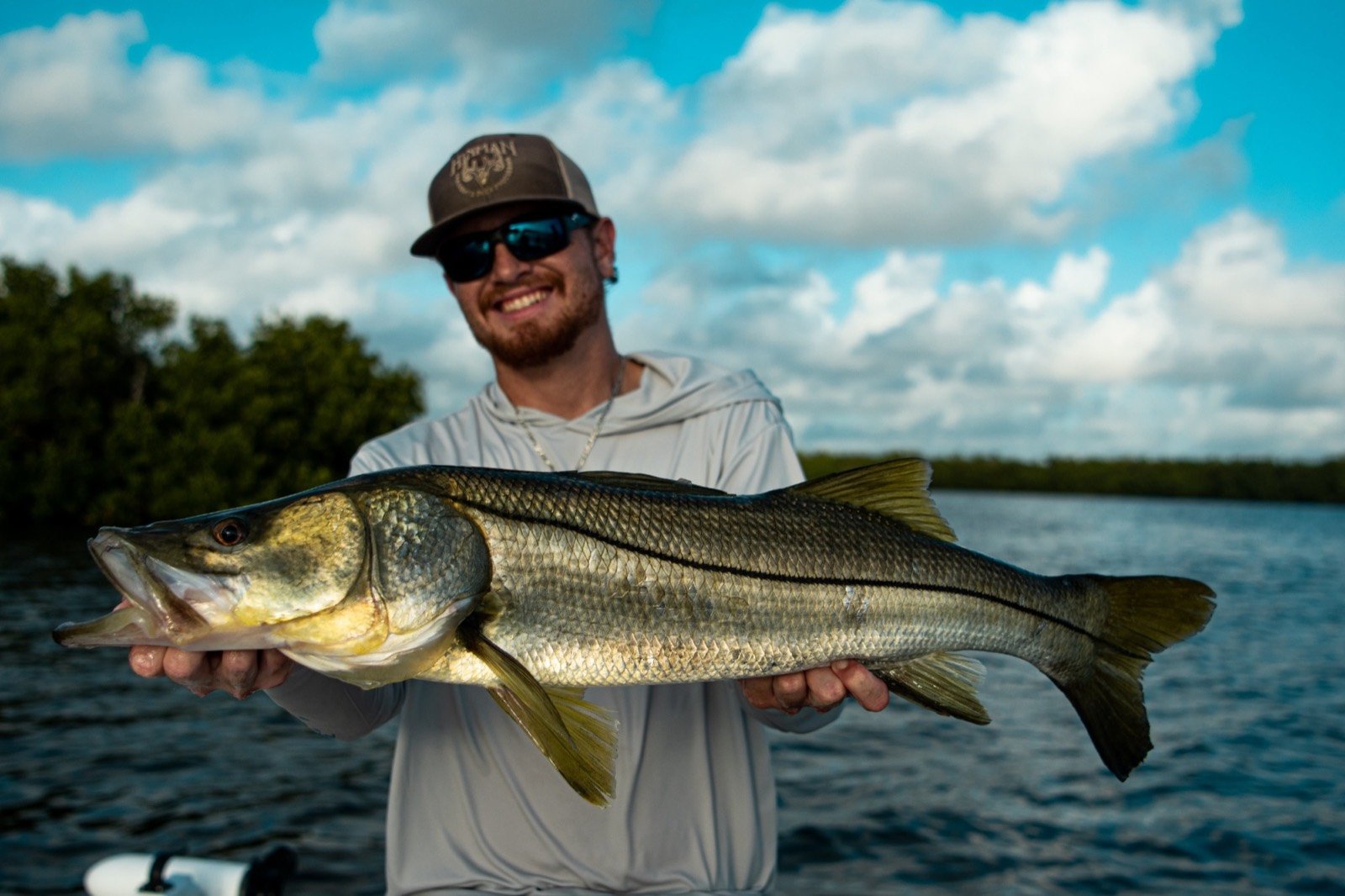
Cooler weather brings the winter favorites back. Sheepshead start showing up around docks and structure, and the redfish bite is still great along mangrove shorelines, docks, and oyster bars. Trout fishing stays consistent on the grass flats, with jacks, ladyfish, and Spanish mackerel mixed in. Snook fishing is still good as they make their way off the beaches. Stone crab season is hitting its stride, so tripletail can be found along the buoy lines. Nearshore, kingfish, cobia, and barracuda are possible on the wrecks and reefs.
Local conditions
Live from NOAA and the National Weather Service.
Tarpon Bay, Sanibel
Loading today's tides…
Sanibel forecast
Loading the forecast…
Month by month
Sheepshead, redfish and trout in the backwaters, the occasional black drum, and sandbar sharks along the coast. When the water temps get cold, snook are still around, but not nearly as active as they are in the summer.
Winter fishing is good throughout the backwaters. Sheepshead, redfish, and trout are the main targets, along with the occasional black drum. Ladyfish and jacks are still plentiful, and tripletail round out the season. Snook are still around, just slower once the water turns cold.
By January, the water temps drop significantly. Sheepshead become plentiful around docks and structure. Redfish can still be found on mangrove shorelines and oyster bars, and occasionally we see a black drum or two. Trout are still a dependable target throughout the wintertime, and we start to see migrating sandbar sharks move along the coast of Sanibel and Captiva and through the passes, which makes for an exciting fight for anglers of all ages. Snook are still around, just slower in the cold water, and ladyfish and jacks still add plenty of fun action.
February is a very similar month to January. Sheepshead are still plentiful around docks and structure, and the redfish bite is pretty consistent. Trout can still be found on the grass flats, along with the occasional black drum. Ladyfish and jacks can still be found on the grass flats while trout fishing. Sandbar sharks keep moving along the coast and through the passes, and snook are still around, just slower in the cold water. Nearshore, cobia and barracuda can still be found on the wrecks and reefs.
As the water warms, snook start to wake up and the redfish bite picks up. Tarpon begin showing up along their migration route through Sanibel, Captiva and Pine Island Sound.
As the water warms, spring fishing starts to pick up considerably. Redfish and snook can be found around docks, mangrove shorelines, and oyster bars. Trout fishing is great on the grass flats, and we start to see some pompano show up as well. As always, ladyfish and jacks can be found while trout fishing inshore, and permit, cobia, and barracuda can be found on the nearshore wrecks and reefs. Toward the end of March, we start to see our first groups of tarpon.
By April, the tarpon fishing starts to really pick up in our area and certainly becomes a main focus. Inshore, the snook and redfish bite stays consistent, and the trout fishing is great as well. We still see some pompano, as well as ladyfish, jacks, and Spanish mackerel inshore. On the nearshore wrecks and reefs, we see permit, cobia, the occasional kingfish, and lots of barracuda.
Tarpon season really hits its stride in May. Snook, redfish, and trout can be found inshore, with plenty of jacks, Spanish mackerel, and ladyfish in the mix. On the nearshore wrecks and reefs, we start to see an influx of permit, along with plenty of barracuda.
Tarpon and snook fishing is in full swing. The summertime heat makes morning trips significantly more enjoyable.
Tarpon are still prevalent in June, with most of the fishing done off the beaches and in the passes. Snook begin to take center stage as spawning fish make their way out of the bays, through the passes and onto the beaches. Trout are still a main target, with jacks, Spanish mackerel, and ladyfish in the mix. We also start to see a push of mangrove snapper into the bays, and they become a target as well. On the nearshore wrecks and reefs, the permit fishing can be spectacular if the weather allows and the afternoon thunderstorms hold off, and there are plenty of barracuda around as well.
Snook fishing is excellent in July as spawning fish make their way through the passes and onto the beaches, with lots of snook holding around docks as well. Tarpon are still around, but not nearly as prevalent as in the spring. In the backcountry, we start to see a lot of mangrove snapper on the grass flats, mixed in with trout, jacks, and ladyfish. Redfish can still be found along mangrove shorelines and oyster bars. Nearshore, the permit fishing can be great if the summertime storms hold off. We find them on the nearshore wrecks and reefs, where we can also find lots of barracuda and snapper. By July, the water temps get pretty warm, and the inshore bite is typically better in the morning.
August fishing is similar to July, with warm water temps, and the morning bite is typically the most productive. Trout fishing is great in the morning, and we still see lots of jacks and ladyfish. Mangrove snapper are still plentiful in the bays, and the snook fishing is still great. Redfish can still be found along mangrove shorelines and oyster bars, and late-season tarpon are possible when conditions cooperate. Nearshore, we're still seeing permit, and as always, barracuda and snapper on the nearshore wrecks and reefs.
More bait, nearshore kingfish, cobia and barracuda, and the winter favorites start to return.
As fall approaches, the temps don't drop a ton, but it definitely takes some of the edge off the summertime heat. More bait starts to show up, and the fishing picks up as well. Redfish become more active, and the snook fishing is still great. Trout are always a main target on the grass flats in the backcountry, with plenty of ladyfish and jacks mixed in. We do start to see fewer mangrove snapper in the bays. As the water temps start to drop, pompano show up inshore and around the passes. Nearshore, we start to see a push of cobia and kingfish, and permit are still prevalent on the wrecks and reefs, along with barracuda and snapper.
Fall weather really begins in October. With falling water temps and cooler weather, we still see large schools of baitfish in the bays and on the beaches, and with that, the fishing is great. Snook and redfish can be found in the backcountry around docks, mangrove shorelines, and oyster bars, and during the fall our redfish start to school up on shorelines and oyster bars. Trout are prevalent on the grass flats, and mixed in on the bait pods, we see Spanish mackerel, jacks, and ladyfish. Tarpon can sometimes be found off the beaches on these large bait pods, but they're never a guarantee. We also start to see sheepshead mixed in inshore, and pompano can sometimes be found around the passes and certain grass flats. In October, stone crabbers start putting out their traps off the beaches, and with that, we begin to see tripletail along the buoy lines. Nearshore, we see kingfish, cobia, and a few permit, as well as barracuda and snapper.
Cooler weather brings the winter favorites back. Sheepshead start showing up around docks and structure, and the redfish bite is still great along mangrove shorelines, docks, and oyster bars. Trout fishing stays consistent on the grass flats, with jacks, ladyfish, and Spanish mackerel mixed in. Snook fishing is still good as they make their way off the beaches. Stone crab season is hitting its stride, so tripletail can be found along the buoy lines. Nearshore, kingfish, cobia, and barracuda are possible on the wrecks and reefs.
Fishing around Sanibel can vary with weather, water conditions and bait movement. The bite is not always guaranteed.

Call or text Capt. Jacob at (239) 671-0244 to find out what's biting this week.